Reflections
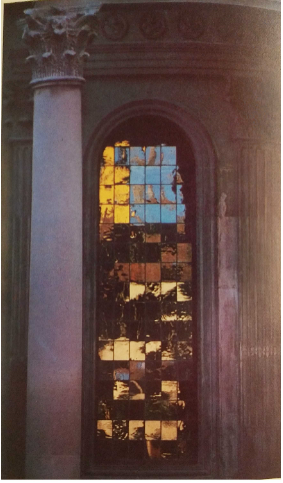
At the end of every June, the firm I work for has a conference. Everyone from the firm is invited to get together in one place. The timing of the conference coincides with annual promotion season and a large part of the conference is dedicated to announcing and celebrating these various promotions, including individuals being promoted to partner.
I will have been at the firm five years as of August 2019, but rituals like the firm conference and the promotion season still seem a bit new and strange to me. Some days I feel like I am a visitor from another land, observing rituals of a culture and people I am surprised to be surrounded by.
One of these rituals is listening to the partner speeches of each newly promoted partner at the conference. This has been a tradition since our firm came into existence over 100 years ago, and although the firm is much bigger now and the number of partners promoted annually continues to grow rapidly, this tradition has remained intact.
The speeches are given to everyone in the meeting venue. Each new partner selects their own walk-on and walk-off music. As each partner speaks, photos of them from throughout their life so far (including baby pictures) are projected behind them. The partner gets to invite their loved ones/family to sit in the front row, and a camera pans to these individuals at the inevitable point in the speech when the partner references the endless support of their spouse, how much they love their kids, and how much they appreciate everything their parents have done for them.
This last part is what has shocked me the most as I have sat through dozens of these speeches: 99% of the time, both of the person’s parents are sitting there in the front row! And about 75% of the time, both of their in-laws are sitting there too! On average, the people accepting position of partner are approximately 5 to 10 years older than me. Watching the camera pan again and again to different pairs of smiling parents, speech after speech, feels like watching the same goddamn impossible David Copperfield-ish magic trick over and over again. And each time it fools me anew.
*****************************************
When my Uncle Ben died in 2015, going to his funeral would result in me seeing my mother for the first time in nearly ten years. And for the first time since I had transitioned genders. I was worried how my mother would punish me for cutting her out of my life. I anxiously consulted with Aunt Terry before the funeral. What if she caused a scene? Should I not come?
“Don’t worry about your mother. Ben’s friends will take care of her if she causes trouble.”
After five days of riding out my extra anxiety about seeing my mother, I took a deep breath and walked into the funeral home. I shook hands with people I could identify and made some small talk. Right before the service started, she found me.
“Hello. I hear you are calling yourself James now?” she asked. Her tone was casual and cool, like she was ordering iced tea at a McDonald’s drive thru.
“Yes. That’s correct.” I said.
She gave me a once over. “Looks like you have been taking care of yourself.”
Then it was time to sit down for the service. After the service I had to see her again for a few hours during Ben’s wake. But her tone remained the same: casual, sometimes even somewhat cheery, and matter of fact. No screaming, no crying, and no mention of the lost decade between us.
When Aunt Terry died, despite the uneventful nature of our interactions at Ben’s funeral, I was scared all over again. Plus, Aunt Terry’s funeral would be different, as we were planning it. Not having control over things was typically a sore point for my mother. As I talked this over with Basil, he reassured me.
“I will talk to her beforehand and tell her she had better be on her best behavior. Plus, it is in public, with other people: she will be more concerned about putting on a performance for everyone else.” Basil said.
I realized he was right. My mother had always abused us either in private or when other people outside of the family could not intervene. In public, she was always putting on the charm, smiling, laughing. How had it taken me more than 30 years to realize that?
After Aunt Terry’s service, my mother made her way towards me during the breakfast repast held at a local hall. I could see she had a book in her hand: it looked like an art book of some kind, maybe a collection of paintings, a coffee table book. I wasn’t sure why she had the volume, but knowing my mother’s tastes, I was certain she hadn’t been reading it.
Basil had been standing by, ready to insert himself between us if necessary. I signaled to him it was okay. Maybe my mother remembered I am my father’s son: if you are going to pique my interest, an old book isn’t a bad way to get your foot in the door.
“Here,” she handed the grey-covered book to me. “Your father bought this for me as a gift the day you were born.”
I took the book and held it in my hands. I was surprised it had survived all of my parents’ moves, all of my mother’s rages, all of our poodles and cats who loved chewing on my father’s book collection.
Sometimes dealing with my mentally ill mother is like dealing with a mentally ill double agent in a spy movie: her true motives are carefully obfuscated for most things, except when emotions or impulse take over, but she hides her feelings so well most of the time it is impossible to know when they are at the helm of her decision making. A kind act is never just a kind act: there are a series of calculations she has made before this gesture, calculations which result in reaching some goal of her own.
Or, as the fabulous B.D. Wong says as the Dark Army leader Whiterose in the TV sci-fi drama Mr. Robot : “Do not mistake my generosity for generosity.”
************************************
Reflections by David Robinson, the book my mother gave me, sat on one of our bookshelves at home once we returned from Buffalo. I knew there was an inscription inside the front cover. Not because I looked, but because I knew my father: he would never gift anyone a book without writing an inscription, and certainly not on the day his first child was born. I just was not ready to read it yet.
I positioned the book where I could see it when I walked into the kitchen each day, so each day I could assess whether or not today was going to be the day I was ready to read whatever he had written on the inside. Two months passed. After Basil and I returned from our trip to Arizona last week, I walked by the bookshelf and saw the cover peeking at me again. I realized I was ready to look.
I have never entirely understood the tradition of giving people who go through the trouble of physically birthing a baby a gift to commemorate the birth. You just brought life into the world: how does that not show the fleeting immateriality of material things? Also, I am sure my mother would have hoped for expensive jewelry to reward her labored efforts. But she married my father.
On the inside of the cover, my father drew an arrow to the printed retail price ($22.50 in early 1980s dollars) and wrote “expensive gift” to demonstrate he understood even while inscribing the book he was not meeting her expectations.
On the following page, my father wrote:
Dear Car,
This book seemed like an appropriate parenthood gift because a child is in certain ways a reflection, perhaps multifaceted like a diamond, of its parents. It’s probably premature to congratulate our child on having such wonderful parents to reflect, but I wanted you to know that, paranoid + self-conscious as I tend to be about these things, I have an enormous amount of confidence in you, + in us, that our life together as a family, will be an incredibly beautiful experience.
Love – Mark
***********************************************
During the firm conference this past June, I sat and watched the partner speeches with a senior manager, B., whom I have gotten to know in the last couple years. He is about 15 years older than me, a proud father of five grown children, and a happy husband to his lovely wife. They got married young–many people told them on their wedding day they wouldn’t last–and nearly thirty years later, they take great pleasure in their bravery of ignoring the nay-sayers. B. also loves Basil’s cooking and mentions that fact frequently, which has further endeared him to me.
During the conference lunch break, we sat on some grass outside the venue and ate some boxed lunches in the sunshine. I knew from our previous conversations B. had already lost both of his parents, but a little later in life than I had. I decided to bring up my marveling at all of the partner parents’ we had seen that day, during the speeches given that morning.
“It is kind of amazing,” he said, wanting to acknowledge my point. “People who haven’t lost a parent don’t understand what it is like. And some people don’t understand what a gift having supportive parents is.”
But despite some additional discussion about the phenomenon, and despite B.’s empathy for what he could discern my point to be, the conversation was unsatisfying to me.
I think my father was right about children being refractions of their parents. But what his inscription made me realize is how parents (or grandparents, caretakers, etc.) serve as prisms to their children. Hardly a day has gone by where I haven’t tried to see a situation, a problem, a story, a painting through my father’s eyes. But because he isn’t here, I know the visage I am given is just my own patchwork version of what I think he would see.
I don’t imagine I will be standing on that stage one day giving a partner speech, for a number of reasons that aren’t relevant to this blog post. But I have never the less tried to imagine how I could possibly convey not only how my father shaped my life, but also how his (earthly) absence has impacted me. Death causes a void: the task of defining, quantifying the absence of something has driven my writing of the last three years. Encapsulating it all in a short speech seems impossible.
Perhaps I would be the first to choose a collection of photos in lieu of a speech. Instead of baby photos and senior pictures, it would be an array of pictures capturing two coffee cups, a hiking trail on the Superstition mountains, retracing Bradbury’s steps on the canals of Venice, California, and countless other reflections of the love for life my father instilled in me.
About The Author

james
Writing down, looking up.